



01 Aug Local vs. International Franchises in Malaysia: The Pros and Cons
Franchising has emerged as a significant and dynamic sector in Malaysia’s economy, offering entrepreneurs a viable pathway to business ownership with the support of an established brand. With a diverse population and a thriving economy, Malaysia presents a fertile ground for both local and international franchises to flourish. The choice between investing in a local or international franchise is a critical decision that can significantly impact a business venture. This decision involves evaluating various factors such as cultural relevance, brand recognition, initial investment costs, and the level of support provided by the franchisor.
Local franchises often have a home-field advantage, deeply rooted in Malaysia’s unique cultural and consumer landscape. These franchises can offer products and services that resonate more deeply with local tastes and preferences, providing a competitive edge in a familiar market. On the other hand, international franchises bring with them the allure of established global brands, comprehensive support systems, and proven business models that have been successful across multiple markets. However, they also come with higher initial costs and potential challenges in adapting to the local market.
Local Franchises
Pros
1. Cultural Relevance
Local franchises possess an in-depth understanding of the culture and consumer behaviour unique to Malaysia, which can be a significant advantage. For example, local food franchises like Ayam Penyet Best have successfully tapped into the Malaysian love for traditional flavours and familiar dining experiences. This cultural relevance means that local franchises can tailor their products and services to meet the specific tastes and preferences of the Malaysian market more effectively than international brands. By offering menus and services that reflect local traditions and culinary preferences, these franchises build a strong connection with customers, fostering brand loyalty and repeat business.

2. Cost Efficiency
The initial investment required for a local franchise is usually lower compared to an international one. This lower cost barrier can make franchising more accessible to a broader range of entrepreneurs. Additionally, local franchises often face reduced import costs as they rely less on imported goods, leading to lower operational expenses. For instance, a local franchise like Marrybrown can source ingredients locally, reducing costs associated with import duties and logistics. This cost efficiency extends to ongoing operations, where local franchises can benefit from lower marketing and promotional expenses due to their familiarity with the local market dynamics.
3. Accessibility to Support and Training
Another significant advantage of local franchises is the ease of access to franchisor support and training. The proximity to headquarters means that franchisees can receive timely assistance and benefit from localised marketing strategies. For example, a local franchise like Tealive, a popular bubble tea brand, can quickly adapt its marketing campaigns to reflect national holidays, cultural events, and local trends, thereby increasing its appeal to the target audience. The ability to receive hands-on training and support from the franchisor ensures that franchisees can effectively manage their operations and address challenges promptly.

Tealive’s promotion in conjunction with Father’s Day 2024 while promoting users to download their Tealive App.
Source: Tealive
Cons
1. Limited Brand Recognition
While local franchises present numerous benefits, one of the primary disadvantages is the limited brand recognition compared to international franchises. A local brand may be well-known within Malaysia, but it might not carry the same weight or credibility as an established international brand. This limited recognition can impact customer trust and initial sales, making it more challenging to attract customers who are not already familiar with the brand. For example, while OldTown White Coffee may be a household name in Malaysia, it lacks the global reach and instant recognition that a brand like Starbucks enjoys.
2. Marketing and Advertising Challenges
Marketing and advertising can also pose a challenge for local franchises. While local franchises benefit from their understanding of the local market, they may not have the same financial resources to invest in large-scale marketing campaigns as international franchises do. This can limit their reach and visibility, requiring them to rely more heavily on word-of-mouth and smaller-scale promotional activities. Building brand awareness and attracting new customers can be a slower and more demanding process without the extensive marketing muscle of international franchises.
3. Operational Challenges Related to Economies of Scale
Additionally, local franchises may face operational challenges related to economies of scale. International franchises often benefit from bulk purchasing and global supply chain networks, reducing costs and ensuring consistent quality across all locations. Local franchises, on the other hand, may not have the same bargaining power or access to extensive supply chains, potentially leading to higher costs and variability in product quality.
International Franchises
Pros
1. Established Brand Recognition
International franchises come with the benefit of established brand recognition and a proven business model. Brands like McDonald’s and Starbucks have a global reputation that can attract customers and instill a sense of trust and reliability. This strong brand presence can lead to quicker customer acquisition and higher initial sales. The familiarity of these brands means that customers are often willing to visit a new outlet because they expect a consistent experience based on their previous encounters with the brand in other locations. This brand equity can be a significant advantage in building a customer base quickly and achieving early profitability.
2. Comprehensive Training and Support Systems
International franchises offer comprehensive training programs and standardized operational procedures, ensuring consistency in quality and service. For instance, a franchisee of a global brand like Subway can benefit from extensive training modules and support systems designed to maintain the brand’s standards worldwide. These training programs often cover all aspects of the business, including operations, customer service, marketing, and management. Additionally, ongoing support from the franchisor helps franchisees address operational challenges, implement best practices, and stay updated with new products and innovations. This robust support infrastructure can be invaluable for franchisees, particularly those who are new to the industry or have limited business experience.
3. Proven Business Models
The proven business models of international franchises reduce the risks associated with starting a new business. These models have been tested and refined across multiple markets, providing a blueprint for success. For example, McDonald’s has a well-documented operational manual that outlines every aspect of running a restaurant, from food preparation to customer service to financial management. This level of detail and standardisation helps ensure that franchisees can replicate the success of other outlets, minimising the trial-and-error phase and accelerating the path to profitability. The consistency of these business models also ensures that customers receive a uniform experience regardless of location, reinforcing brand loyalty and trust.
Cons
1. Higher Initial Investment Costs
One of the major disadvantages of international franchises is the higher initial investment required. International brands often have substantial franchise fees, setup costs, and ongoing royalties that can be a significant financial burden. For example, the cost to open a McDonald’s franchise can be significantly higher than that of a local brand due to the global brand’s high standards and requirements. This higher cost barrier can limit the accessibility of international franchises to entrepreneurs with substantial capital, potentially excluding those who are highly motivated but lack the necessary financial resources.
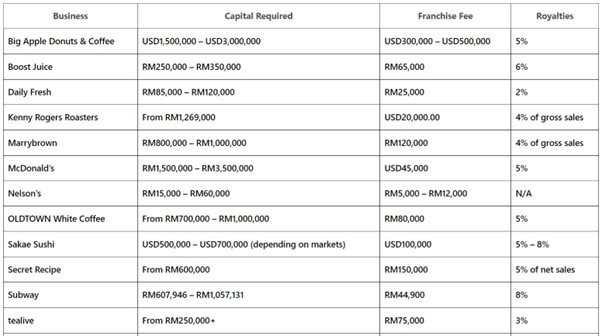
McDonald’s franchise fee is significantly higher compared to local franchise brands such as Daily Fresh, Marrybrown and Tealive.
Source: QuadrantBiz
2. Rigidity in Operational Procedures
International franchises often come with strict operational procedures and standards that must be adhered to meticulously. While this ensures consistency and quality, it can also be a drawback for franchisees who desire more operational flexibility and innovation. For instance, a franchisee may find it challenging to introduce a locally-inspired menu item that could resonate well with Malaysian customers due to corporate restrictions. This rigidity can limit the ability of franchisees to adapt to local market trends and customer preferences, potentially impacting the franchise’s competitiveness and relevance in the local market.
3. Dependency on Global Supply Chains
International franchises often rely on global supply chains to maintain consistency in their products and services. This dependency can be a disadvantage in the face of supply chain disruptions, import restrictions, or fluctuations in currency exchange rates. For instance, sourcing specific ingredients or products from abroad can become challenging and expensive due to logistical issues or trade policies. These challenges can lead to increased operational costs, delays, and potential compromises in product quality. Local franchises, in contrast, may have more flexibility to source locally, reducing their vulnerability to such disruptions.
In a nutshell
Understanding the pros and cons of both local and international franchises is essential for making an informed decision. Entrepreneurs must weigh the benefits of cultural alignment and cost efficiency offered by local franchises against the global brand recognition provided by international franchises. Whether one opts for the familiarity and local insight of a homegrown brand or the prestige and support of an international giant, the ultimate choice should align with the entrepreneur’s goals, resources, and vision for their business.