




05 Sep All You Need to Know About Franchise Fees.
There are more than 1,100 franchises registered with the Ministry of Domestic Trade and Consumer Affairs. In 2022, the total sales value exceeded RM14 billion, and by 2025, it is expected to exceed RM26 billion. However, despite the promising landscape, the journey is fraught with challenges, evident in the high failure rate of around 60 percent within the first five years of operation. A study published in the World Journal of Social Sciences highlighted the reasons behind these failures, pinpointing financial and managerial issues as primary obstacles.
The inherent capital risk involved in establishing a business poses additional hurdles for aspiring entrepreneurs. Owning a franchise is undoubtedly an investment that comes with a price tag. It is not simply a matter of purchasing a retail space, adorning it with the franchise’s branding, and opening for business under their banner. The privilege to operate within a franchise system requires payment, commonly known as a franchise fee.
What is a Franchise Business?
A franchise business is a business model in which an individual (the franchisee) purchases the right to operate a business under the established brand and operational framework of a larger corporation (the franchisor). This arrangement grants the franchisee access to the franchisor’s trademark, products or services, marketing strategies, and ongoing support in exchange for financial consideration, typically in the form of franchise fees.
Franchise businesses covers a diverse array of industries, ranging from fast food and retail to hospitality and professional services. The appeal of franchising lies in its ability to offer entrepreneurs a turnkey solution for business ownership, leveraging the brand recognition and support systems of established corporations while allowing for local ownership and management.
Franchise Fees
A franchise fee is payment made by a franchisee to the franchisor for the right to establish and operate a franchise unit within the franchisor’s larger network.
The exact amount of franchise fees can vary significantly from one franchise opportunity to another, influenced by various factors. Franchisors must set fees that ensure profitability for their organisation. This necessitates that the fee covers not only the initial setup costs of the franchise, such as training, operational support, and initial marketing efforts but also generates additional revenue.
However, franchisors must be careful to avoid setting fees that are prohibitively high, which could deter potential franchisees. Finding the right balance is essential, ensuring that the fee remains competitive and attractive within the market while still providing adequate returns for the franchisor.
Calculating Franchise Fees
Franchise fees are the financial obligations incurred by franchisees to acquire the rights to operate under the franchisor’s brand and business model. These fees typically consist of two primary components: the initial franchise fee and ongoing royalties.
Initial Franchise Fee
This upfront payment grants the franchisee the right to use the franchisor’s brand and business model. The initial franchise fee varies widely depending on factors such as the brand’s popularity, industry demand, and the level of support provided by the franchisor. It covers expenses associated with franchise training, site selection, and initial setup, serving as an entry point into then franchise system. The average franchise fee in Malaysia can range from just RM30,000 all the way up to RM1,000,000 depending on the franchise opportunity.

An example of franchise opportunity with Tealive in Malaysia.
Source: CompareHero
Ongoing Royalties
There are two primary approaches to calculating royalty fees in franchising.
-
- Percentage of Turnover or Gross Profit
Under this approach, royalties are calculated as a percentage of the franchisee’s sales revenue or gross profit over a specified period. While this method allows royalties to scale with business growth, it may pose challenges for franchisees during periods of rapid expansion or fluctuating sales.
-
- Fixed Royalty Rate
Alternatively, franchisors may opt for a fixed royalty rate that remains constant regardless of business performance. While providing certainty for franchisees, this approach may limit franchisors’ revenue potential during periods of growth.
Factors influencing the determination of royalty fees include industry benchmarks, the value of the brand, level of support provided by the franchisor, investment in research and development, and the profitability of the franchise business model. By carefully assessing these factors, franchisors can establish royalty rates that strike a balance between financial sustainability and franchisee affordability.
Determining the appropriate fee structure involves a balance between the franchisor’s need for revenue and support services and the franchisee’s ability to sustain profitability. Franchise fees should reflect the value proposition offered by the franchisor while remaining competitive within the industry and conducive to franchisee success.
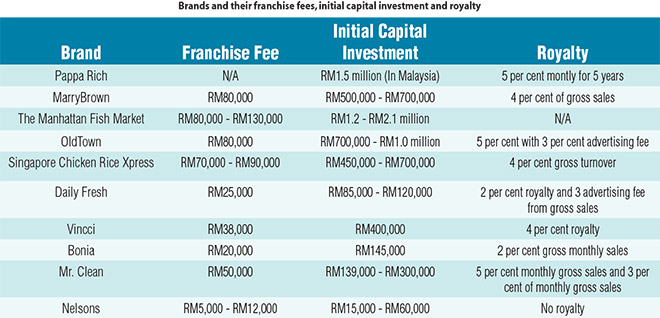
Some franchise brand examples in Malaysia with their franchise fees, initial
capital
investment and royalty fees.
Source: MalaysianFranchiseAssociation
Impact on Franchisee and Franchisor
The impact of franchise fees extends to both franchisees and franchisors, shaping their respective roles and responsibilities within the franchise system.
Franchisee Perspective
For franchisees, franchise fees represent a significant financial commitment that directly influences their profitability and return on investment. The initial franchise fee serves as a barrier to entry into the franchise system, while ongoing royalties contribute to operational expenses and impact profit margins. Franchisees must carefully evaluate the cost-benefit ratio of franchise fees when considering franchise opportunities, ensuring they align with their financial objectives and growth projections.
Franchisor Perspective
From the franchisor’s standpoint, franchise fees are essential for generating revenue, funding brand development initiatives, and providing ongoing support to franchisees. The initial franchise fee serves as a means of recouping investment in franchise development and expansion, while ongoing royalties contribute to the franchisor’s bottom line and facilitate long-term growth. Maintaining a fair and equitable fee structure is crucial for fostering positive relationships with franchisees and sustaining the franchise network’s success.
Challenges faced
Entering into a franchise agreement is not a guarantee of success; it brings forth its own set of complexities and considerations. Despite the established brands and proven systems, prospective franchisees must carefully weigh the risks against the benefits before making a commitment. One of the primary challenges in franchising is the limited autonomy granted to franchisees. Every decision made by a franchisee can have ripple effects, impacting the broader franchise network. To address this issue, formal franchise agreements are established to delineate guidelines beneficial to the overall business.
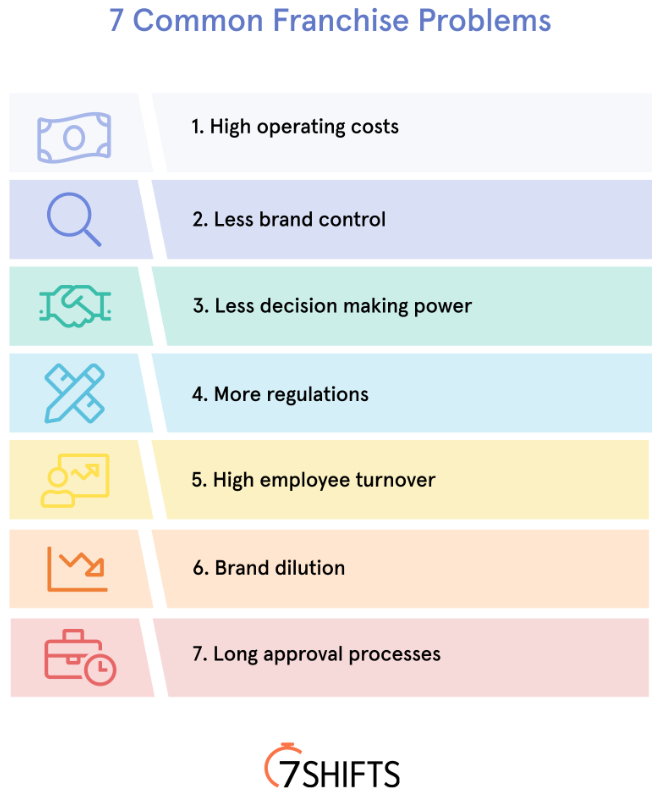
The franchise agreement serves as the basis of any franchise venture, setting out obligations and expectations for both parties. Typically, these agreements aim to ensure equitable treatment, with franchisees adhering to established business practices while franchisors safeguard the profitability and well-being of franchise investments. However, fostering a successful franchise relationship goes beyond contractual obligations. Trust and goodwill play crucial roles in sustaining long-term growth. Franchisees rely on franchisors to innovate and maintain brand integrity, while franchisors depend on franchisees to uphold operational standards. This mutual dependency can lead to a reduction in individual control over business operations. Franchisees may find themselves constrained by prescribed systems, while franchisors face heightened considerations and risks in decision-making processes.
Entering into a franchise agreement requires a significant commitment, often with limited room for negotiation once the contract is signed. Franchisees, especially those affiliated with larger corporations, may find themselves at a disadvantage in terms of bargaining power, as another party is willing to step in if one decides to exit. Therefore, it is vital for aspiring franchisees to equip themselves with a solid understanding of the franchising landscape before taking the plunge. Seeking guidance from legal experts to decipher complex franchise contracts can provide invaluable clarity on potential pitfalls and obligations. Ultimately, deciding whether to pursue a franchise opportunity requires careful consideration of the associated risks and rewards, making it a pivotal business decision that demands thorough evaluation.
In A Nutshell
Consider franchise fees as the key that unlocks the door to business ownership within a recognized brand. They represent the investment made by franchisees to gain access to the franchisor’s proven business model, support systems, and brand recognition. By understanding the components of franchise fees, how they are calculated, and their impact on both parties, aspiring entrepreneurs can make informed decisions when exploring franchise opportunities. Ultimately, a harmonious balance between franchise fees and franchisee profitability is essential for fostering mutual success and sustainable growth within the franchise system.
Here at intellect, our expertise in franchising can serve as your trusted guide in starting your own franchise business or becoming a franchisee. Our wealth of experience and knowledge in franchising provides invaluable insights and support every step of the way. We can help you make informed decisions and mitigate risks. With our guidance, you can start your franchising journey with confidence and clarity, knowing that you have us as a dedicated partner by your side.