



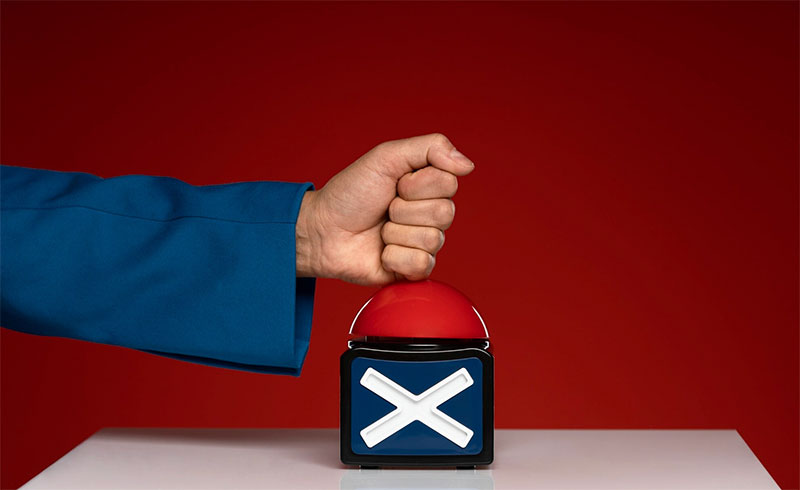
14 Feb Trademark Objection in Malaysia: What Happens When MyIPO Rejects Your Trademark?
A trademark objection in Malaysia does not necessarily mean your application is over. Depending on the reason for the objection, you may be able to respond with legal arguments, evidence, amendments or other supporting material. This is particularly important as trademark applications in Malaysia continue to grow. MyIPO recorded 59,812 trademark applications in 2025, compared with 56,040 in 2024. In 2025, 21,974 applications were filed by Malaysian applicants and 37,838 by foreign applicants. Understanding why MyIPO objects to a trademark and how to respond, can therefore be critical to protecting a brand.
What Happens After You File a Trademark Application in Malaysia?
The general process can be understood as:
Application → Examination → Objection → Response → Acceptance or Refusal
After a trademark application is filed, MyIPO examines whether the application satisfies the requirements of the Trademarks Act 2019 (Act 815) and the applicable regulations. The current legislation and regulations are available through MyIPO’s official trademark resources. If the Registrar identifies an issue, the applicant may receive a provisional refusal or examination objection. The applicant then has an opportunity to respond. If the response successfully addresses the objection, the application may proceed. If the Registrar remains unsatisfied, the application may ultimately be refused. The important point is that receiving an objection is not the same as receiving a final rejection.

Why Does MyIPO Reject a Trademark?
MyIPO identifies two broad categories of grounds for refusing a trademark:
- Absolute grounds for refusal
- Relative grounds for refusal
These are provided principally under Sections 23 and 24 of the Trademarks Act 2019.
1. Absolute Grounds: The Trademark Itself Has a Problem
Absolute grounds concern characteristics of the proposed trademark itself. Under Section 23, registration may be refused where, among other things, a mark:
- lacks distinctive character;
- consists exclusively of descriptive terms;
- consists exclusively of indications commonly used in trade;
- contains certain prohibited or restricted signs; or
- falls within other categories specified by the legislation.
For example, imagine a business selling coffee applying to register the word “COFFEE” for coffee products. The issue is not necessarily that another company already owns the same trademark. Instead, the term is inherently descriptive of the goods. Similarly, a mark such as “SWEET” for confectionery may face difficulty because it could describe a characteristic of the goods rather than function primarily as an indicator of commercial origin. This is why a trademark does not automatically become registrable simply because no identical mark appears in a search.
2. Relative Grounds: Is There an Earlier Trademark?
Under Section 24, MyIPO may refuse an application where the proposed trademark conflicts with an earlier trademark or right. This includes situations where the marks are identical or similar and the relevant goods or services are identical or similar, particularly where there is a likelihood of confusion among the public. For example:
Applicant: NOVA — clothing
Earlier mark: NOVAH — clothing
Even though the names are not exactly the same, the Registrar may consider factors such as visual, aural and conceptual similarity, together with the relationship between the goods or services. This leads to one of the most common questions business owners ask:
“Why was my trademark rejected even though nobody registered the exact same name?”
Because trademark examination is not limited to identical-name searches. A proposed mark may encounter an objection because it is:
- similar to an earlier trademark;
- likely to cause confusion;
- descriptive or non-distinctive;
- prohibited by legislation; or
- otherwise unable to satisfy the statutory requirements.
The fact that “nobody has the exact same name” therefore does not guarantee registration.

How Do You Respond to a Trademark Objection in Malaysia?
The correct response depends heavily on the ground cited by MyIPO.A response to a descriptiveness objection, for example, will require a different strategy from a response to an earlier conflicting trademark.
Step 1: Identify the Exact Ground of Objection
Do not respond simply by saying:
“Our company has been using this trademark for many years.”
First identify what MyIPO is actually objecting to. Is the objection based on Section 23? Section 24? A formal deficiency? A cited earlier mark? Or another requirement? The legal basis determines what evidence and arguments are relevant.
Step 2: Assess the Trademark as a Whole
Where similarity is alleged, the assessment should not necessarily stop at one shared word. The overall comparison may involve:
- visual similarity;
- phonetic or aural similarity;
- conceptual similarity;
- the nature of the goods or services;
- the relevant consumers;
- the channels of trade; and
- the likelihood of confusion.
For example, two marks may share a common descriptive element while having sufficiently different distinctive elements overall.
Step 3: Prepare Evidence Where Relevant
Evidence can be particularly important where an applicant needs to demonstrate the commercial significance or acquired distinctiveness of a mark. Depending on the circumstances, relevant evidence may include:
- sales records;
- invoices;
- advertising and marketing materials;
- website and social-media use;
- packaging;
- promotional expenditure;
- length and extent of use; and
- evidence of recognition among consumers.
However, evidence should be targeted to the legal issue. More documents do not necessarily mean a stronger response.
Step 4: Consider Whether Other Options Are Available
Section 25 of the Trademarks Act 2019 recognises honest concurrent use and certain special circumstances as potential exceptions to a Section 24 objection. The Act also provides for registration in certain circumstances where the proprietor of an earlier trademark or earlier right consents, subject to the statutory requirements.
Whether these routes are appropriate depends on the facts and should be assessed carefully rather than treated as automatic solutions.
What If MyIPO Still Refuses the Application?
A refusal is not necessarily the end of the matter. MyIPO’s procedures provide mechanisms for requesting the grounds of a decision and applying for a hearing in appropriate circumstances. MyIPO’s current fee schedule lists an application to the Registrar for a hearing under the relevant provisions at RM150 per class, while a request for grounds of a total provisional refusal is listed at RM1,000.
There are also prescribed time limits for responding to examination-related notices. For example, MyIPO’s examination manual states that certain provisional refusals require a response within two months, while failure to respond within the applicable period can have serious consequences for the application. For this reason, applicants should not ignore an objection or wait until the deadline is approaching before obtaining advice.
How Can Businesses Reduce the Risk of Trademark Rejection?
The best time to deal with a potential trademark objection is before filing. A proper pre-filing strategy can include:
-
- Conducting a comprehensive trademark search
Look beyond exact matches and identify potentially conflicting marks. - Assessing inherent distinctiveness
Ask whether the proposed mark actually functions as a badge of origin or merely describes the goods or services. - Selecting the right classes
Trademark protection is tied to the goods and services specified in the application. - Considering the commercial context
A mark that looks acceptable in isolation may present greater risk when assessed against existing brands in the same market. - Preparing a filing strategy
Where appropriate, businesses can consider alternative marks, distinctive logo elements or other strategies before significant branding and marketing expenditure is incurred.
- Conducting a comprehensive trademark search
MyIPO itself provides a preliminary advice and search service, currently listed at RM250 per class, which can be considered as part of a pre-filing strategy.

Final Thoughts: A Trademark Objection Is a Legal Issue, Not Just an Administrative Problem
A trademark rejected in Malaysia can be frustrating, particularly when a business has already invested in its branding.
But the correct response is not automatically to abandon the brand.
The first question should be: why has MyIPO objected?
An objection based on descriptiveness may require arguments concerning distinctiveness. An objection based on an earlier trademark may require a detailed comparison of the marks, goods and services, and likelihood of confusion. In some cases, evidence of use or other legal grounds may also be relevant.
Because the response strategy depends on the precise objection and the evidence available, businesses should assess the examination report carefully before deciding whether to amend, argue, provide evidence, request a hearing or pursue another strategy.
For businesses building a long-term brand, a trademark application should be treated as more than a filing exercise. The objective is not simply to submit a trademark application, it is to obtain meaningful and defensible trademark protection.

Frequently Asked Questions
1. What is a trademark objection in Malaysia?
A trademark objection occurs when MyIPO raises an issue with a trademark application during examination. The objection may be based on absolute grounds, relative grounds or other statutory and procedural requirements.
2. What is the difference between a trademark objection and a trademark refusal?
An objection or provisional refusal gives the applicant an opportunity to respond. A final refusal means MyIPO has decided that the application cannot proceed based on the applicable grounds.
3. Can I register a trademark if a similar trademark already exists?
Possibly, depending on the circumstances. The assessment can involve the degree of similarity, the goods or services, likelihood of confusion and whether any statutory exceptions or other circumstances apply.
4. How long do I have to respond to a MyIPO trademark objection?
The applicable deadline depends on the type of notice issued. Certain provisional refusals require a response within two months. Applicants should follow the deadline stated in the relevant MyIPO notice and seek advice promptly.
5. Can evidence of use help overcome a trademark objection?
In appropriate cases, yes. Evidence of use may be relevant to demonstrating acquired distinctiveness or supporting particular arguments. However, simply showing that a mark has been used does not automatically overcome every type of objection.
6. Should I file a new trademark application after rejection?
Not necessarily. Filing a new application without understanding the original objection may simply lead to the same problem. The better approach is to first determine the legal basis of the refusal and assess the available options.