



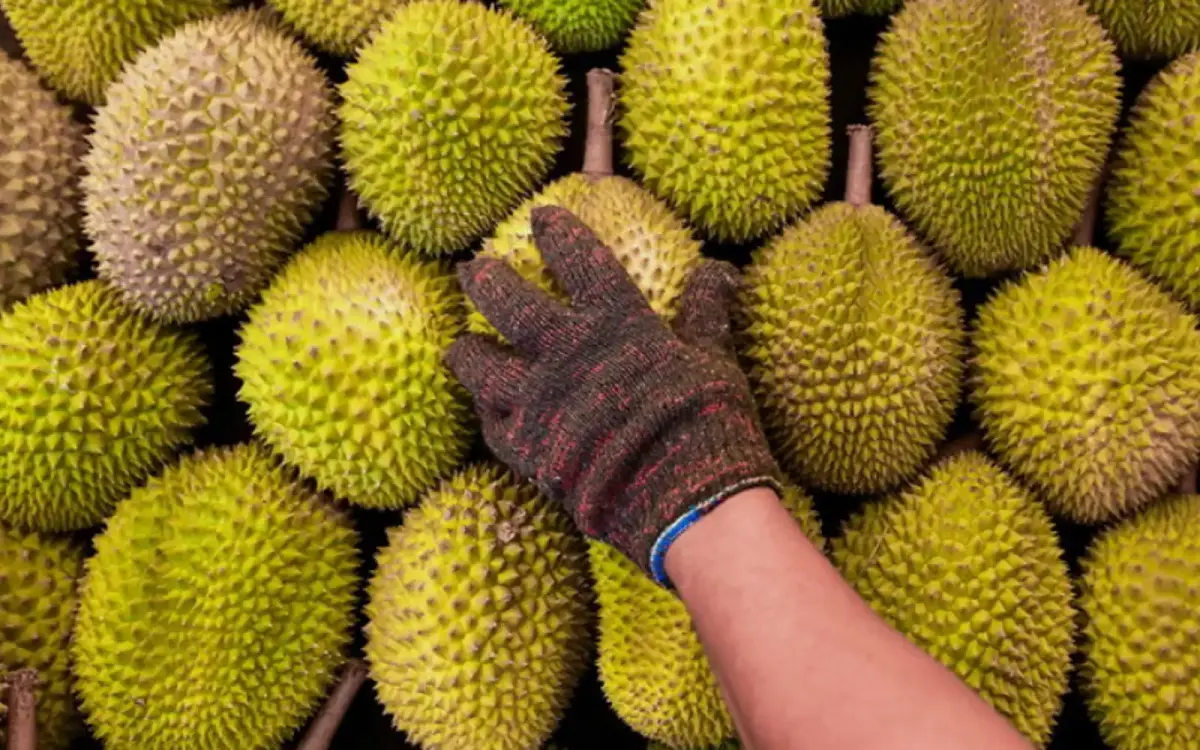
17 Dec Protecting Malaysia’s Durian Legacy.
Malaysian durians are often referred to as the “King of Fruits” due to their distinctive aroma, rich taste, and creamy texture. Varieties such as Musang King, D24, and Red Prawn have gained both domestic and international acclaim for their superior qualities. Malaysia’s prized Musang King durian, known for its creamy texture and rich flavor, has been granted an extension of its intellectual property protection, a move that will likely drive its price higher, particularly in international markets like China. Last month, Malaysia’s Agriculture and Food Security Minister, Datuk Seri Mohamad Sabu, announced the renewal of the trademark protection for Musang King, ensuring that the fruit’s unique identity remains safeguarded until March 2034. This decision comes as part of Malaysia’s ongoing efforts to protect and promote its durian industry, particularly the Musang King variety, which has become a global symbol of premium durians.
The Musang King trademark is protected as a Geographical Indication (GI), a special form of intellectual property that links a product to a specific geographical region, reflecting its unique qualities or reputation associated with that area. The World Intellectual Property Organization (WIPO) explains that GIs are granted to products whose characteristics are deeply tied to their place of origin, and that only producers in the designated area who meet certain standards can use the protected name. In this case, the Musang King GI protects Malaysia’s specific cultivation of the durian, ensuring that only fruit grown within the country, under the right conditions, can bear the name “Musang King”.
What Are Geographical Indications (GIs)?
A Geographical Indication (GI) is a type of intellectual property that identifies a product as originating from a particular region, and having qualities, reputation, or characteristics due to that region’s geographic environment, climate, or traditional production methods. Unlike regular trademarks, which protect brand names, logos, or product names, a GI ensures that the product’s name is exclusively linked to a particular geographic area. For example, the GI for Champagne ensures that only sparkling wines produced in the Champagne region of France can be labeled as such. Similarly, Parmigiano Reggiano cheese can only come from Parma, Italy, and must adhere to specific production standards.
For Malaysia’s durians, a GI would ensure that varieties like Musang King and D24 could only be sold as such if they are grown in designated regions within Malaysia. This ties the fruit’s unique characteristics to its geographic origin, protecting its reputation from potential misuse by nonauthentic producers.
A Premium Durian for China’s Growing Market
China is currently the world’s largest consumer of durian, and Malaysian durians, especially Musang King, have become highly sought after. The demand for Musang King in China has been steadily growing, with reports showing that the fruit can sell for over US$80 per piece in certain markets, significantly higher than other durian varieties. According to Shenzhen-based importers in Guangzhou, the extension of IP protection helps imported Musang King durians command prices four to five times higher than other durian varieties.
The high demand for Malaysian durians in China is also reflected in the country’s import statistics. In 2023, durian imports to China increased by 70%, totaling 1.43 million tons. Malaysia was the leading exporter, accounting for RM1.19 billion (US$281 million) of that total. The Malaysian Agriculture Ministry has set a target for durian exports to reach RM1.8 billion (US$430 million) by 2030. The successful export of fresh durians to China, made possible by a phytosanitary protocol signed in June, marks a significant milestone for Malaysia’s durian industry. The first batch of fresh Musang King durians arrived in China in August 2023, selling out quickly at a premium price of RM350 (US$83) each.
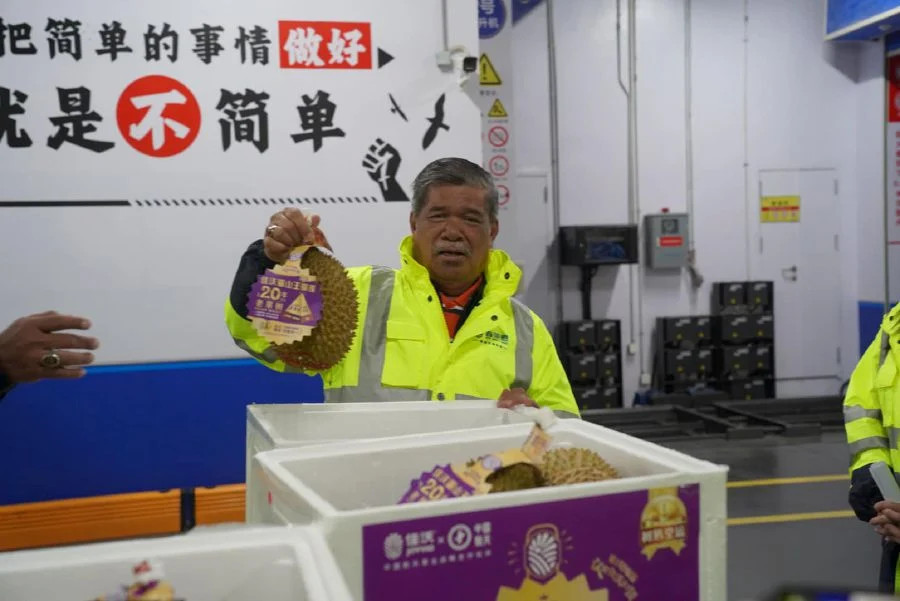
Agriculture and Food Security Minister Datuk Seri Mohamad Sabu at the durian packaging and distribution warehouse operated by Joy Ming Mau in Shenzhen, China.
Source: NST
The Role of GIs in Protecting Durian Varieties
The introduction of Musang King as a Geographical Indication would guarantee that only durians grown in specific areas—such as Pahang or Johor—can be marketed under that name. This would prevent counterfeit durians or inferior products from being sold under the Musang King label, thus protecting both the product’s reputation and its market value. The GI helps maintain the high standards expected from this premium durian variety and ensures consumers receive the quality they expect.
Beyond Musang King, other durian varieties, such as D24 and Red Prawn, can also benefit from a GI, ensuring that they too are linked to their specific origins in Malaysia. By registering these varieties as GIs, producers can maintain the exclusivity of their product, enabling them to command premium prices both locally and internationally.
How Geographical Indications Differ from Regular Trademarks
While trademarks protect brand names, logos, or product names to distinguish one company’s goods from another, Geographical Indications specifically protect the connection between a product and its region of origin. A trademark is typically owned by an individual business or organization, while a GI is owned collectively by a group of producers from the geographic area where the product originates. The purpose of a GI is to prevent unauthorized producers outside of the designated region from marketing a product under a name that is associated with a particular quality or reputation.
For instance, while a Musang King trademark would protect the name as a brand of a specific producer, a GI would protect the name as a product linked to the specific regions in Malaysia where it is grown and harvested. This is a critical distinction, especially for Malaysia’s durian industry, where the authenticity and quality of the fruit depend on specific environmental conditions such as soil type, weather, and cultivation practices that are unique to certain areas.
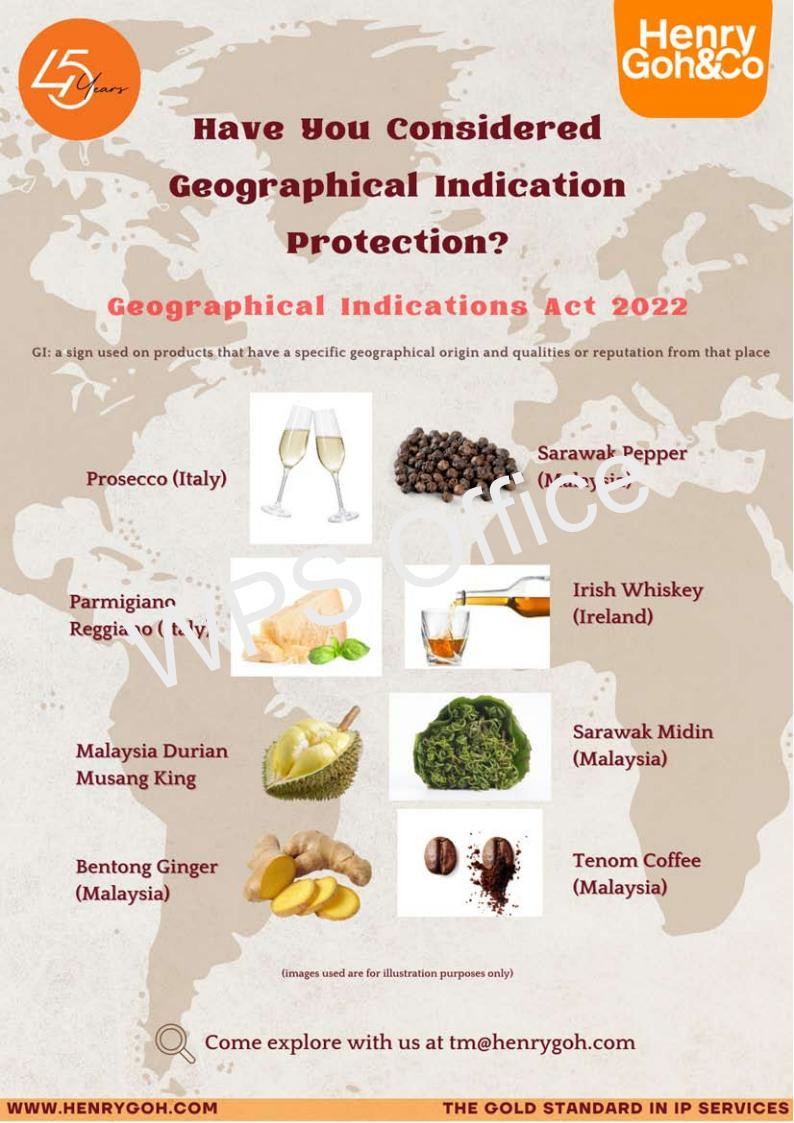
Geographical Indications Act 2022 is an act to provide for the protection and registration of geographical indications in relation to goods.
Source: Henry Goh
Benefits of Geographical Indications for Malaysian Durian Producers
There are several key benefits for Malaysian durian producers in registering a GI for their products. First and foremost, a GI helps protect the brand’s reputation by ensuring that only durians grown in the designated regions can be sold under the authentic name. This not only maintains the quality of the product but also helps prevent the mislabeling of inferior durians as premium varieties like Musang King.
Secondly, a GI can significantly increase the market value of the durians. With the GI in place, producers can promote the distinct qualities of the durian tied to its geographic origin, which often results in higher consumer trust and willingness to pay a premium for the product. By ensuring that consumers are getting the real deal, producers can also command higher prices in both local and international markets.
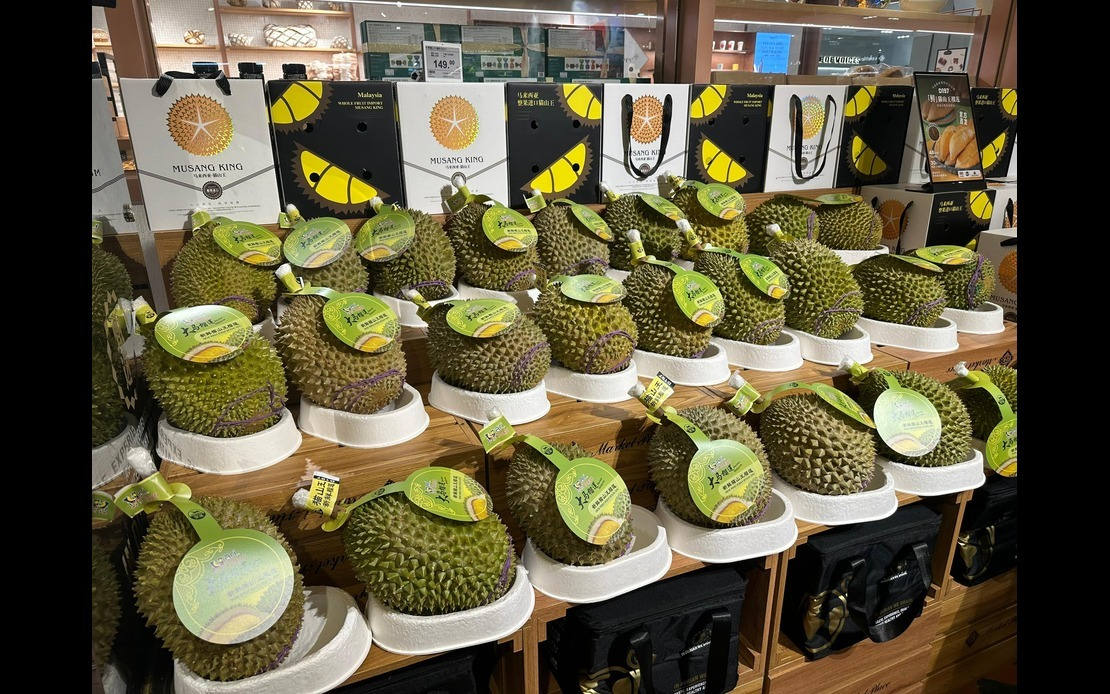
Fresh Malaysian durians on sale at selected retail outlets in six provinces, Beijing, Zhengzhou, Shanghai, Guanzhou, Shengzhen and Nanning in China.
Source: Bernama
Moreover, GIs help preserve traditional agricultural practices. By requiring producers to adhere to certain standards and methods, GIs encourage the continued cultivation of durians in specific regions using time-tested techniques that enhance the fruit’s quality. This not only protects the authenticity of the product but also supports the livelihoods of small-scale farmers who may rely on these traditional practices to produce high-quality durians.
Lastly, a registered GI provides legal protection against counterfeiting and infringement. Unauthorized producers cannot legally use the GI to market inferior products, and any violations can be legally challenged. This ensures that the reputation and economic value of the durian varieties are protected.
The Process of Registering a Geographical Indication in Malaysia
In Malaysia, the process of registering a Geographical Indication is managed by the Malaysian Intellectual Property Corporation (MyIPO). The steps to obtaining a GI typically involve demonstrating that the product has distinct qualities tied to its geographic origin. Producers must also form a collective association to manage and enforce the GI.
The application process involves providing evidence of the product’s uniqueness, such as details about the specific environmental conditions, traditional farming methods, and historical connection to the region. Once the application is approved, the GI is registered, offering legal protection to the producers within the defined region.
After registration, the GI must be maintained through regular certification and quality checks to ensure that the standards remain consistent. This ongoing process helps to preserve the reputation of the product and ensures that the GI remains a valuable asset for producers and consumers alike.
To conclude
By extending the Geographical Indication until 2034, Malaysia preserves the authenticity, quality, and reputation of Musang King. As global demand continues to grow, this protection will not only benefit Malaysian farmers but also help preserve the cultural and agricultural heritage that makes Musang King one of the world’s most sought-after durian varieties.
Malaysia can continue to cultivate its reputation as the leader in premium durians, and here at intellect we can help to maintain the integrity and authenticity of the product in global markets through intellectual property protection.